Specification resource

CWL specification review for optical filter RFQs

Center wavelength is a useful anchor for an optical filter request, but it should travel with tolerance, bandwidth, blocking range and application context.

Optical filter request guide

CWL for optical filter RFQs

Prepare CWL fields for optical filter review with wavelength, bandwidth, blocking, geometry, product-family path, and RFQ checklist guidance.

What does CWL describe in an optical filter request?

CWL in the request package

CWL belongs in the first technical description because it shapes how an optical filter request is reviewed. Use the field to describe the intended spectral position, width, blocking need, geometry, or transmission context before asking for a drawing review or quotation.

Add the field to the technical RFQ package before sending drawings or spectra.

Why should this field be prepared before contacting Lumalyx?

Why the field matters before review

A clear value helps separate a general component search from a request that can be checked against filter family, wavelength band, coating context, substrate, and size constraints. When the value is uncertain, state the acceptable range or the measurement condition instead of forcing a single number.

Prepare known values, acceptable ranges, and measurement conditions.

Which values should a buyer prepare for CWL?

Values to prepare

Useful request notes include the target band or wavelength, bandwidth or blocking target, AOI, substrate, outside dimensions, quantity, application context, and any drawings or spectra that explain the optical path. Keep commercial timing separate from the technical fields so the first review can focus on feasibility.

List target values and attach supporting spectra when available.

Which product family should be reviewed with CWL?

Related product family path

Review the product family that matches the optical function first: bandpass filters for passband selection, longpass or shortpass filters for edge behavior, dichroic optics for beam splitting, neutral density filters for attenuation, and coated optics when the geometry or substrate is the main constraint.

Open the relevant product family, then return to the RFQ package.

How should CWL be written in an inquiry?

Request checklist

Write the field as a technical note rather than a sales summary. Include what is fixed, what can be adjusted, what documents are attached, and which application context matters most. This keeps the inquiry useful without asking the buyer to make unsupported performance assumptions.

Send the checklist with application context, target values, and document needs.

What documents can be requested for review?

Documents to ask about

A buyer can ask for product sheets, coating review notes, drawing review, or spectrum-related documents when those materials are needed for evaluation. The request should describe the project context and the exact document type needed so Lumalyx can route the response for technical review.

Ask for the document type needed and include the related field values.
Technical fields to prepare

Use these fields to turn the page topic into a reviewable Lumalyx request.

  • application context
  • target wavelength or band
  • blocking or OD target
  • AOI or geometry
  • substrate and size
  • quantity
  • documents or drawings

What CWL anchors

CWL, or center wavelength, points to the nominal middle of a pass band or narrowband window. It helps identify the spectral area that deserves review first.

What CWL cannot decide alone

The same center wavelength can require different bandwidth, transmission, blocking and angle behavior. A request should not rely on one wavelength label.

How to make it reviewable

Send the target wavelength, tolerance, useful signal range, unwanted light range, size and any spectra or drawing context available.

Request context

Use CWL as the request anchor, not the full specification.

In optical filter conversations, CWL usually means center wavelength. It is the number buyers often know first, especially for fluorescence, analyzer, laser or sensing work. Lumalyx treats that value as a starting point for review, then checks which surrounding fields are needed before a product family or custom option can be discussed.

Pair CWL with FWHM, OD and transmission targets before sending an inquiry.

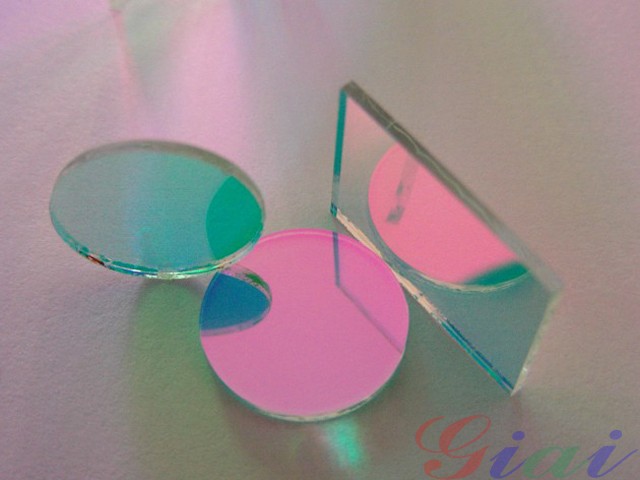
Representative coated optical filter component for specification preparation
Representative product visual for specification preparation.
Which fields should be sent with CWL?

Send the wavelength, tolerance and the signals around it.

A useful CWL request names the target wavelength in nanometers, the acceptable tolerance if known, the useful pass band, the unwanted wavelength range, and the expected size or holder constraint. If the part is part of a channel set, include the other channels so adjacent leakage can be reviewed.

Use the RFQ path when some values are unknown; mark them as open fields.

When is CWL not enough?

CWL needs bandwidth and blocking context to become actionable.

A 520 nm request could describe a narrowband filter, a fluorescence emission path, a dichroic decision point, or a broader coated-optics discussion. The next useful questions are usually FWHM, transmission target, blocked range, AOI, substrate and size.

Move from the wavelength number to a specification checklist.

Where should a CWL request go next?

Connect CWL to the product family that matches the signal task.

Bandpass and fluorescence pages are usually the closest starting point when CWL describes a pass band. Longpass, shortpass, dichroic and coated component pages may be better when the request is about a cutoff, reflection/transmission split, or compact imaging path.

Browse product families or start an RFQ with the known wavelength fields.

Fields to prepare before review

These fields make the request easier to evaluate and show which values are confirmed, approximate or still open.

  • Center wavelength in nm
  • Wavelength tolerance if known
  • FWHM or useful pass band
  • Blocked wavelength range and OD target
  • Transmission target
  • AOI, substrate, size and quantity
RFQ preparation

Turn known and open values into one request.

Send the values you know, mark uncertain fields clearly and include spectra, drawings or existing references when they help explain the signal path.

Start technical RFQ
Specification depth

Make a CWL request specific enough to review.

A center wavelength value becomes more useful when the request explains the tolerance, bandwidth, blocked range and signal path around it.

FieldSend whenReview note
CWLThe wanted pass band has a known center.Pair it with tolerance and bandwidth.
FWHM or pass rangeThe width of the useful signal band matters.Use pass-band edges if FWHM is not known.
Blocked rangeNeighboring wavelengths or source content may affect the channel.Name the unwanted range separately from the pass band.

Common misconception

A single wavelength label does not describe a complete optical filter request.

Regional note

DACH, Japan and South Korea localization should wait for regional query or RFQ evidence showing different CWL vocabulary or buyer-task behavior.

RFQ prompt

Attach spectra, source/detector notes or a channel list when CWL belongs to a multi-channel path.

FAQ

Common specification questions.

These answers keep the request focused on reviewable engineering fields.

What does CWL mean in an optical filter request?

CWL usually means center wavelength, the nominal middle of a pass band or narrowband window. It should be sent with bandwidth, tolerance, blocking and use context.

Is CWL enough to request a quote?

It is rarely enough by itself. Review is clearer when CWL is paired with FWHM, transmission target, blocked range, OD, size and application context.

What should I send if the center wavelength is approximate?

Send the approximate value, explain the source or detector context, and mark the tolerance as unknown so the review can focus on the missing field.