
Wavelength window
Record the target pass band, blocked range, center wavelength and tolerance. A longpass or shortpass request should not rely on the cutoff name alone.
Use this checklist to turn wavelength needs, blocking targets and mechanical constraints into a reviewable optical filter request.
Record the target pass band, blocked range, center wavelength and tolerance. A longpass or shortpass request should not rely on the cutoff name alone.
Capture transmission target, OD or blocking depth, expected background light and any adjacent channel that could create leakage.
Add AOI, substrate preference, size, thickness, quantity, drawing constraints and any spectrum or reference curve available.
The component PDF has been ingested into the project records. Public content uses Lumalyx planning aliases for RFQ language, while component page and model references stay in the project records for traceability.
Naming pattern: LMX-{DOMAIN}-{APPLICATION}-{COMPONENT}-{ANCHOR}-{VARIANT}. Example: LMX-MED-PCR-CH-FAM-A maps to a component FAM qPCR channel example without making the component model a Lumalyx SKU.
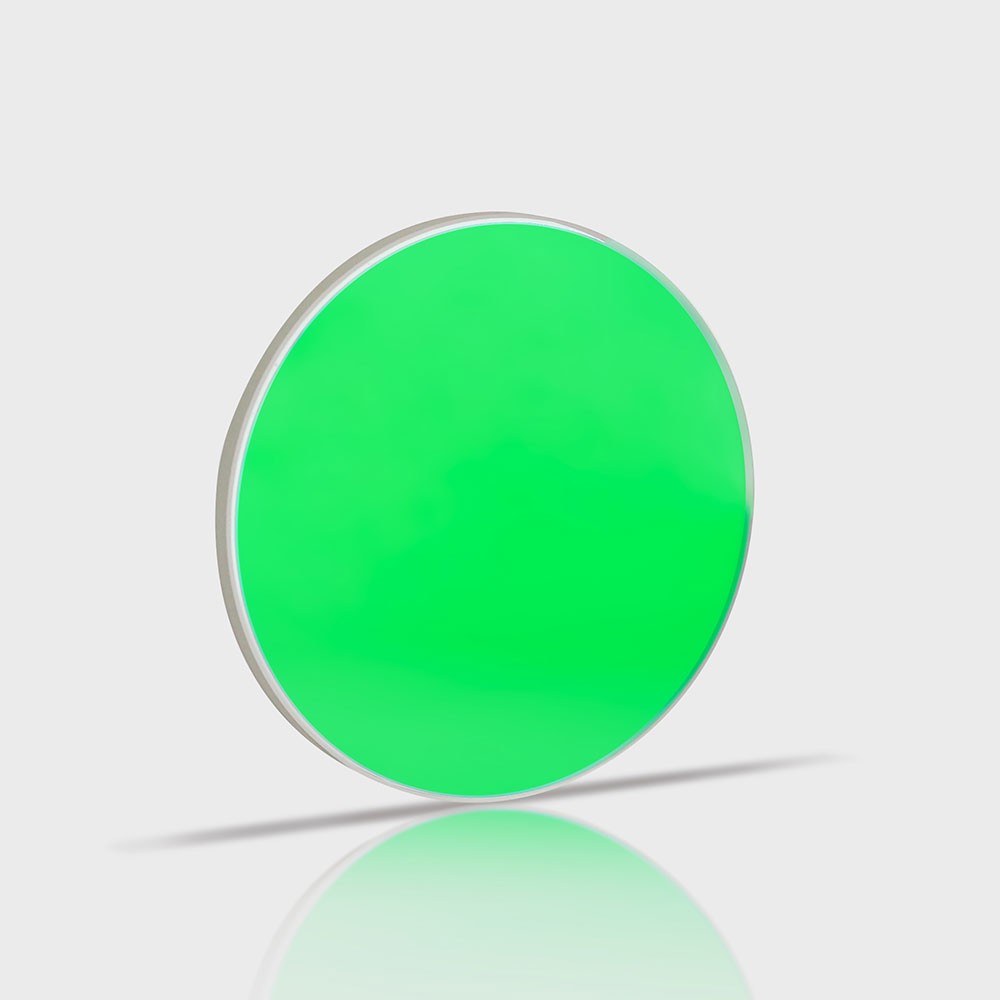
A stronger request separates optical behavior from mechanical and commercial context. The same wavelength label can still require different blocking depth, pass-band width, angle behavior or size limits.
The reviewed component catalog set covers longpass, shortpass, narrowband and neutral density vocabulary. These examples show the type of fields to prepare, not final Lumalyx product commitments.
| Example | Family | Fields shown in catalog review |
|---|---|---|
| LP425 longpass | Longpass filter | pass band 430-1200 nm; center wavelength 425 nm +/-3; listed transmission T > 93%; blocking depth T < 0.5% |
| LP470 longpass | Longpass filter | pass band 475-1200 nm; center wavelength 470 nm +/-3; listed transmission T > 94%; blocking depth T < 0.1% |
| LP590 longpass | Longpass filter | pass band 600-1100 nm; listed transmission T > 90%; blocking depth T < 0.5% |
| neutral density filter | Neutral density filter | OD range OD0-OD4 |
| SP850 shortpass | Shortpass filter | working band 420-1100 nm; center wavelength 850 nm; listed transmission T > 92%; blocking depth T < 0.1% |
| SP580 shortpass | Shortpass filter | working band 400-700 nm; center wavelength 580 nm; listed transmission T > 95%; blocking depth T < 0.1% |
| SP970 shortpass | Shortpass filter | working band 420-1100 nm; center wavelength 970 nm; listed transmission T > 93%; blocking depth T < 0.1% |
| NBP800 narrowband | Narrowband filter | center wavelength 800 nm; blocking range 200-780 nm and 820-1100 nm; blocking depth T < 0.1%; FWHM 12 nm |
Component catalog entries are translated into Lumalyx planning aliases before public use. Examples from the medical catalog include LMX-MED-PCR-CH-FAM-A for a qPCR FAM channel example, LMX-MED-FLOW-BP-480-A for a flow cytometry bandpass example, and LMX-MIR-SPIRO-BP-4P65UM-A for a mid-IR spirometer reference.
Lumalyx can structure the inquiry around the useful signal, unwanted signal, geometry and documentation needed for engineering review. Final values should be confirmed against spectra, drawings and current catalog or custom-build options.
Send the known wavelength, blocking, geometry and quantity fields. Mark unknown values clearly so engineering review can focus on the missing decisions.
Start RFQThese answers keep the request focused on reviewable engineering fields.
Start with pass band or center wavelength, blocked range, transmission target, OD or cutoff depth, AOI, substrate, size and quantity.
Yes. Mark unknown fields clearly and include the application, light source, detector and any spectra so the review can identify what is missing.
No. They are examples of specification fields. Current values, availability and suitability require RFQ review.
This section connects the page to practical request fields, application context and engineering review steps.
Questions about CWL, FWHM, OD, AOI, transmission, blocking, size and substrate belong here or in related FAQ modules.
Example values show which fields are commonly requested and should be verified for the actual instrument.