Wavelength resource

780 nm optical filter RFQ guide

780 nm sits in near-infrared discussions for bandpass, longpass, fluorescence-adjacent and imaging paths. The request should define the useful signal window and unwanted range.

Optical filter request guide

780 nm Optical Filters request guide

Prepare 780 nm Optical Filters fields for optical filter review with wavelength, bandwidth, blocking, geometry, product-family path, and RFQ checklist guidance.

How should 780 nm be framed in an optical filter request?

780 nm optical filter request context

780 nm is a starting point for a technical request, not a complete specification by itself. State whether the wavelength is used as an excitation band, emission band, blocking region, reference channel, sensing band, or alignment point so the filter family can be reviewed in context.

Use the wavelength together with bandwidth, blocking, AOI, and application context.

Which bandwidth and blocking fields should accompany 780 nm?

Bandwidth and blocking fields to prepare

Prepare the target passband or cutoff behavior, FWHM or edge position when known, OD or blocking region, transmission context, and measurement condition. If the final band is still open, provide the working range and the optical path so the request can be discussed without overstating a fixed design.

Add bandwidth and blocking notes before requesting review.

What application context helps make a 780 nm inquiry useful?

Application context that matters

Useful context includes fluorescence channel, machine vision illumination, sensing target, alignment use, imaging path, detector type, and any nearby wavelengths that must be separated. The page does not decide suitability; it helps the buyer prepare the fields needed for a technical conversation.

Describe the optical path and nearby bands that matter.

Which product families may connect to 780 nm?

Related filter families

A wavelength request may point toward bandpass filters, edge filters, dichroic optics, neutral density filters, or coated elements depending on whether the task is selecting a band, removing a band, splitting a beam, reducing intensity, or fitting a mechanical geometry.

Choose the product family by optical function, then include the wavelength.

What should be included in a 780 nm RFQ note?

Request checklist

Include wavelength, acceptable tolerance or range, bandwidth, blocking region, AOI, substrate, dimensions, quantity, environment notes, and any spectrum file or drawing. Keep unconfirmed needs as open questions so the technical review can respond to the real uncertainty.

Prepare the technical note and attach spectra or drawings where relevant.

Which documents should a buyer ask about for 780 nm?

Documents on request

Ask for the product sheet, drawing review, coating discussion, or spectrum-related material that supports the evaluation. Document availability should be confirmed through the request path rather than assumed from the public page.

Send a document request with the wavelength and application context.

Technical fields to prepare

Use these fields to turn the page topic into a reviewable Lumalyx request.

  • application context
  • target wavelength or band
  • blocking or OD target
  • AOI or geometry
  • substrate and size
  • quantity
  • documents or drawings

Define the wavelength role

State whether 780 nm is the center of a pass band, longpass cutoff, source wavelength, fluorescence-related path or imaging reference.

Prepare review fields

Prepare CWL or cutoff, FWHM, transmission target, blocked range, OD target, source and detector context, AOI, substrate, size and quantity.

Choose a product path

Use spectral filters for bandpass and longpass review, mid-IR/sensing pages when the path relates to infrared detection, and coated optics pages when geometry matters.

Wavelength to RFQ

780 nm is the anchor, not the finished request.

Near-infrared labels can hide different detector and source constraints. Keep 780 nm requests tied to the actual signal path.

Send known values, mark open values clearly, and include spectra or drawings when they explain the signal path.

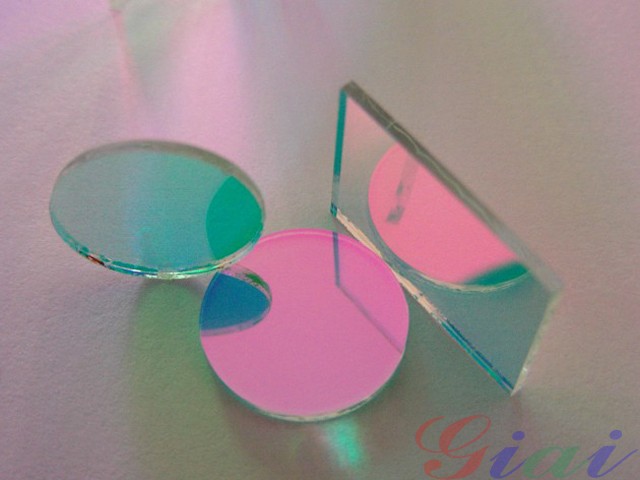
Representative optical filter component for wavelength request preparation
Representative product visual for wavelength request preparation.

Fields to prepare before review

A clearer wavelength request separates useful signal, unwanted light, geometry and commercial context.

  • 780 nm role
  • CWL/cutoff and bandwidth
  • Transmission target
  • Blocked visible/NIR ranges
  • Source and detector context
  • AOI, size and substrate
RFQ preparation

Move from wavelength search to reviewable request.

Lumalyx can review the request more efficiently when 780 nm is paired with pass or blocked range, bandwidth, OD, transmission, source, detector and mechanical fields.

Start wavelength RFQ
Wavelength depth

Define 780 nm within a near-infrared signal path.

780 nm sits near NIR bandpass, longpass, fluorescence-adjacent and imaging discussions. The request should name useful signal and unwanted ranges.

FieldSend whenReview note
780 nm roleThe NIR value anchors the request.State pass, cutoff or source-cleanup role.
Visible/NIR blockingBackground or neighboring content matters.Name blocked ranges and OD target.
Detector contextSensor response shapes the request.Include detector and source details.

Application context

780 nm may appear in NIR sensing, imaging, spectral filtering and source-related optical paths.

Common misconception

Near-infrared wavelength terms still require pass range, blocking and detector context.

Product path

Use spectral filters for NIR band work and mid-IR/sensing resources when the request is part of a sensing path.

Regional note

Regional 780 nm pages should be signal-led, especially for inspection or sensing RFQ differences.

RFQ prompt

Send 780 nm role, CWL/cutoff, bandwidth, blocked ranges, source/detector context, AOI and size.

FAQ

Common 780 nm request questions.

These answers keep the page focused on RFQ preparation and product-family navigation.

What should a 780 nm bandpass request include?

Send CWL, FWHM, transmission target, blocked range, OD target, source and detector context, AOI and size.

Can 780 nm be part of a fluorescence path?

It can be part of a fluorescence-adjacent or infrared channel discussion, but the request should state the channel role and neighboring wavelengths.

Why include detector context for 780 nm?

Detector response can affect what adjacent or background wavelengths need to be blocked.