Problem review

Channel crosstalk optical filter review

Crosstalk language is useful at intake, but the RFQ needs the wanted signal, leaking wavelength range, adjacent channels and detector context.

Optical filter request guide

Channel Crosstalk optical review guide

Prepare Channel Crosstalk fields for optical filter review with wavelength, bandwidth, blocking, geometry, product-family path, and RFQ checklist guidance.

What should a buyer record when reviewing channel crosstalk?

Start with the observed symptom

Begin with what the system shows: the channel, wavelength region, signal behavior, background condition, cutoff uncertainty, or leakage pattern that needs review. A useful note describes the observation without turning it into a diagnosis or product claim.

Write the observation and attach spectra or test notes if available.

Which optical fields are commonly needed for channel crosstalk?

Optical fields to collect

Collect wavelength bands, FWHM or edge position, blocking or OD target, AOI, substrate, dimensions, detector or source context, and any neighboring channels. These fields help convert a symptom into a technical inquiry that can be reviewed against product families.

Prepare the fields before selecting a filter family.

What should not be inferred from channel crosstalk alone?

What the symptom does not prove

The symptom alone does not prove that one filter type, coating approach, product family, or alternate component path is correct. Keep the inquiry focused on the optical evidence available and ask for review of the relevant fields rather than asserting the cause.

State what is known and what remains open for review.

Which attachments help review channel crosstalk?

Attachments to prepare

Helpful attachments can include spectra, drawings, channel maps, source and detector notes, geometry sketches, current component information, and measurement conditions. The public page should guide preparation; the final interpretation belongs in the technical response.

Attach spectra, drawings, and system context when available.

Which product families may be relevant to channel crosstalk?

Related product families

Depending on the observation, the review may involve bandpass filters, edge filters, notch filters, dichroic optics, neutral density filters, or coated elements. The useful first step is to connect the symptom to request fields, then choose the family path.

Move to the product family that matches the optical task.

How should a buyer ask Lumalyx to review channel crosstalk?

RFQ next step

Send a structured inquiry with the symptom, field list, attachments, application context, and document needs. Avoid asking for a conclusion from the symptom alone; ask for a review of the optical requirement and the information needed next.

Submit the review package through the RFQ path.

Technical fields to prepare

Use these fields to turn the page topic into a reviewable Lumalyx request.

  • application context
  • target wavelength or band
  • blocking or OD target
  • AOI or geometry
  • substrate and size
  • quantity
  • documents or drawings

Problem frame

Channel crosstalk usually means a signal from one channel appears where another channel should be read. For optical review, the symptom must be translated into excitation, emission, reflected/transmitted bands, detector range and blocking fields.

Review fields

Prepare wanted signal band, unwanted or leaking band, adjacent channel list, current filter references if any, OD/blocking target, detector response, source spectrum, AOI and size.

Product path

Start with fluorescence bandpass filters and dichroic mirrors when the issue is channel separation. Use the spectral crosstalk analyzer to organize channel assumptions before RFQ.

Review boundary

Use the symptom to choose request fields, not to promise an outcome.

This page keeps crosstalk discussion at the request-preparation level. It helps prepare the fields needed for review.

The safest next step is to send known optical values and mark open fields clearly.

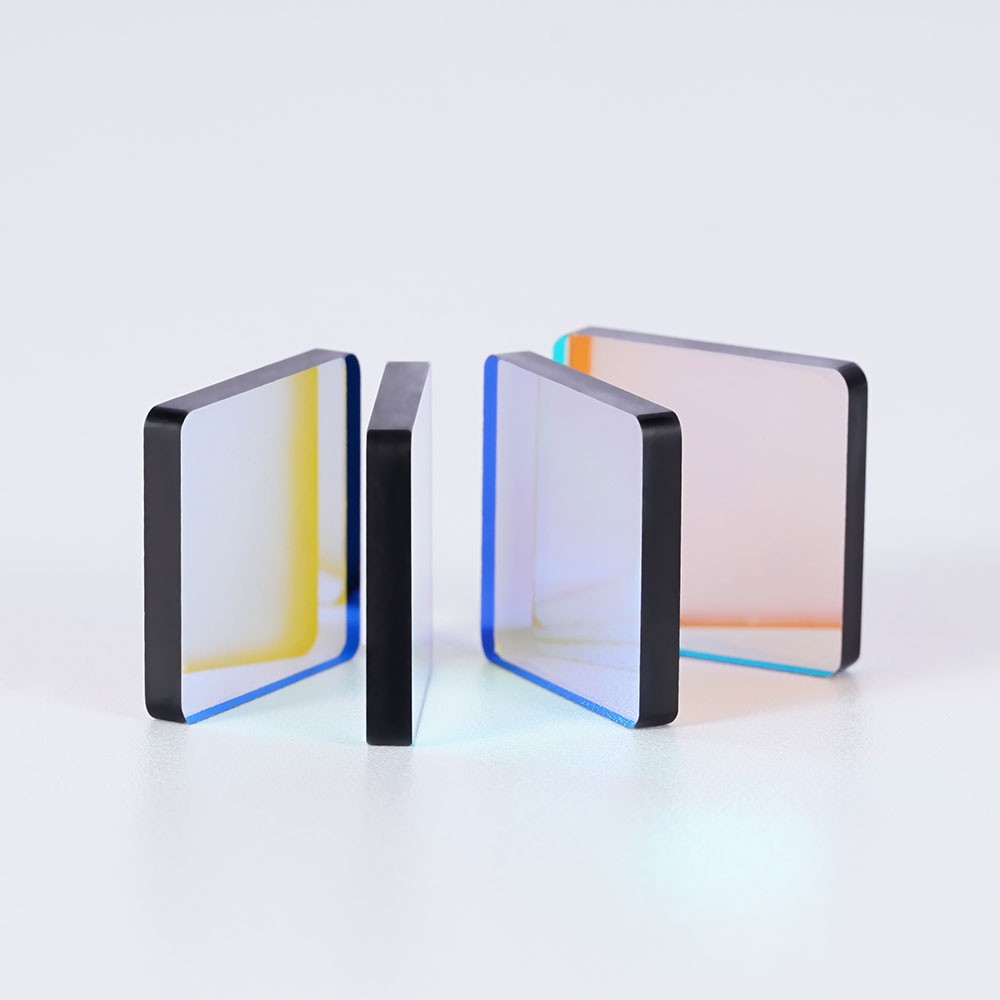
Representative optical component for signal-path problem review
Representative product visual for signal-path problem review.

Fields to prepare before review

These fields move the request from a symptom into a reviewable optical package.

  • Wanted signal band
  • Leaking or unwanted wavelength range
  • Adjacent channel list
  • Current filter or spectra
  • OD/blocking target
  • Detector, AOI, size and substrate
RFQ preparation

Send the signal path, not only the symptom.

Lumalyx can review a request more efficiently when the problem is paired with wavelength ranges, blocking or attenuation targets, AOI, substrate, size and use context.

Start problem review RFQ
Problem-review depth

Translate crosstalk into channel and blocking fields.

A crosstalk review is clearer when the request names the wanted channel, suspected leaking channel, detector range and current filter context.

FieldSend whenReview note
Wanted bandThe useful signal is known.State CWL, FWHM or pass-band edges.
Leaking bandAn adjacent channel may enter the detector path.Name the suspected range and source if known.
Blocking targetUnwanted signal should be limited.Use OD target as a review field, not as an outcome promise.

What not to infer

A page or RFQ can organize crosstalk fields, but it cannot promise final system separation without complete optical-path review.

Attachments

Attach spectra, channel tables, current filter references and detector range when available.

Regional note

Regional pages should wait for evidence that DACH, Japan or Korea buyers search for channel-overlap review differently.

RFQ prompt

Send wanted band, leaking band, adjacent channels, detector context, blocking target, AOI, substrate and size.

FAQ

Common Channel crosstalk questions.

These answers keep the page focused on optical RFQ preparation.

How do I describe channel crosstalk in an optical RFQ?

List the wanted band, leaking band, adjacent channels, detector range, source spectrum and any current filter references.

What can a crosstalk review check?

The review can check optical fields, adjacent channels and possible product paths. Final system behavior depends on the full signal path.

Should I attach spectra for crosstalk review?

Yes. Spectra or a channel table make it easier to identify overlap, blocking gaps and missing fields.